

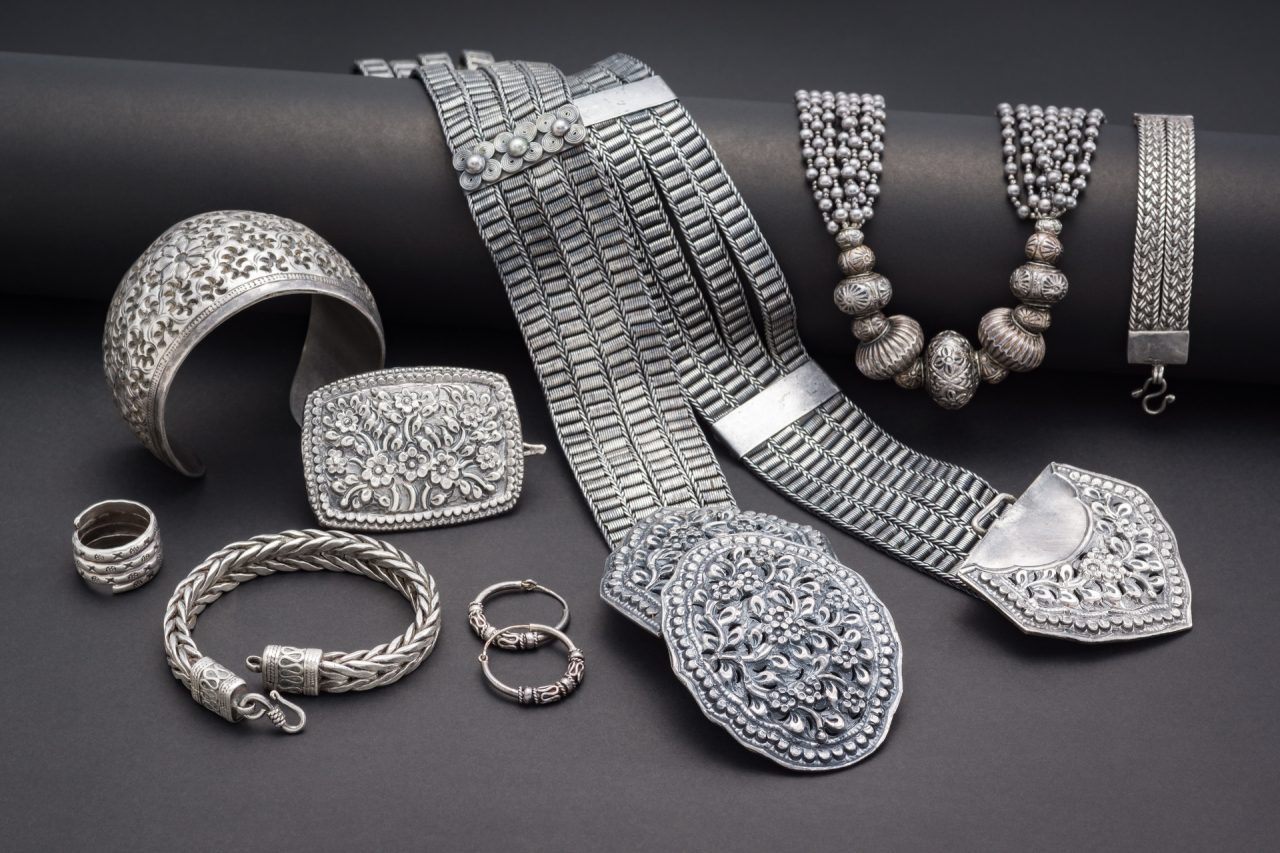
Silver has a way of showing up in places most people don’t expect. It is not always jewelry sitting in a box. Sometimes it is a drawer full of old spoons, a tray that has not been used in years, or a set of candlesticks that somehow made it through three different houses.
The question that usually follows is simple… what is this actually worth?
Pricing non-jewelry silver is not complicated, but it does follow a process. It comes down to a few key things… what it is made of, how much of it there is, and what the market is doing at that moment.
The first step is figuring out what the item actually is.
Not everything that looks like silver is solid silver. Some items are silver-plated, which means a thin layer of silver is applied over a base metal. It looks the part, but the amount of actual silver is minimal. That difference matters.
Solid silver items are usually marked. The most common mark is “925,” which means the piece is sterling silver. That tells exactly how much pure silver is in the item. Other markings exist too, and each one points to a different level of purity.
Sometimes there is no marking at all. That is when testing comes into play. A closer look, a few simple checks, and it becomes clear whether the item is solid or plated.
Once that is sorted out, the next step is weight.
Silver is priced by weight. It does not matter if it is a fork, a bowl, or a decorative piece. The amount of silver in the item is what counts. The heavier the piece, the more silver it contains.
Of course, it is not quite as simple as putting it on a scale and calling it a day.
Some items include parts that are not silver. Knife handles, for example, often have filling inside. Decorative pieces might have mixed materials. Those factors get taken into account so the weight reflects the actual silver content, not just the total weight of the object.
Then comes the market.
Silver prices move. Some days they are up, some days they are down. That price, often called the spot price, plays a big role in how silver items are valued. The value of a piece today might not be the same next week, even if nothing about the piece itself has changed.
That is just the nature of metals.
At this point, there is a basic value… purity multiplied by weight, adjusted for the current market. That gives a solid starting point.
But sometimes, there is more to it.
Condition can play a role, depending on the item. A damaged piece still has its silver value, but it may not have value beyond that. On the other hand, a well-preserved item might be worth more as a whole piece than as raw silver.
That is where things get a little more interesting.
Some items fall into the category of collectibles. Older silverware sets, pieces from known makers, or unique designs can carry value beyond their metal content. In those cases, the item is looked at differently. It is not just about melting it down… it is about whether it has value as it is.
Flatware is one of the most common types of non-jewelry silver that shows up.
Forks, spoons, knives, serving pieces… they tend to come in sets, and those sets can vary quite a bit. Some are solid sterling silver. Others are plated. Sorting through that can take a little time, but it is an important step.
Decorative pieces are another category.
Trays, bowls, pitchers, and candlesticks all have their own characteristics. Some are heavier than they look. Others are lighter than expected. Each one gets evaluated based on what it is made of and how it was constructed.
Then there are the items that surprise people.
Things like old industrial components or specialty pieces that contain silver for functional reasons. Silver is used in certain applications because of its properties, and those items get priced based on the same basic factors… content and weight.
One part of the process that often goes unnoticed is sorting.
Grouping items by type and purity helps keep everything organized. It also makes it easier to calculate value accurately. Mixing plated items with solid silver would not make much sense, so everything gets separated before any numbers are put together.
Documentation helps keep things clear.
Weights, purity levels, and current market values all get noted. That way, there is a record of how the final number was reached. It is straightforward, and it keeps the process transparent.
At the end of the day, pricing non-jewelry silver is about understanding what is actually there.
It is not about guessing. It is not about appearances. It is about breaking it down into measurable parts and working from there.
And every now and then, something unexpected shows up… a piece with a little more history, a little more character, or a little more value than it first appeared to have.
Those are the moments that make the process interesting.
Because sometimes, that old tray sitting in the back of a cabinet is just silver… and sometimes, it is a little more than that.