

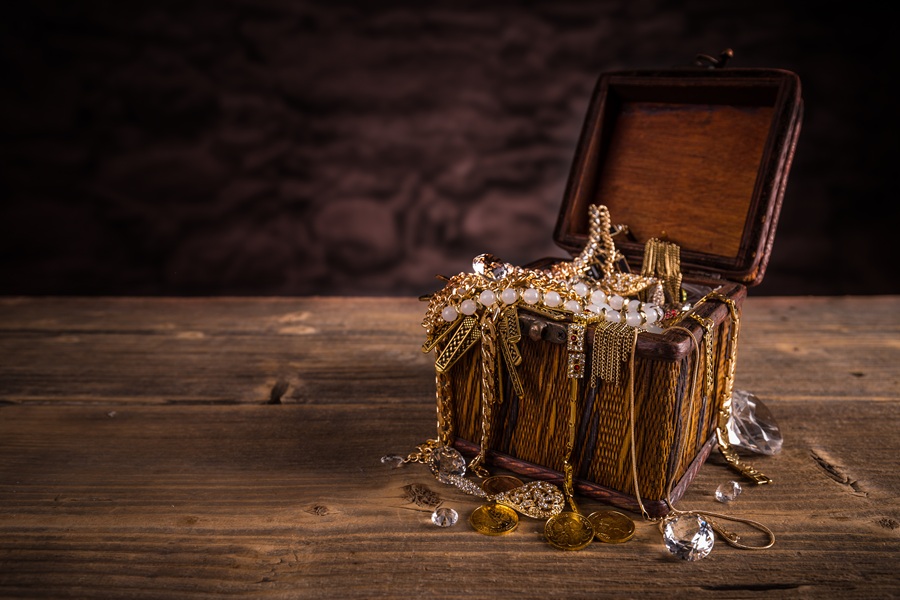
There is something different about vintage jewelry.
Modern jewelry can certainly be beautiful, but vintage pieces tend to carry a kind of personality that newer mass-produced items sometimes struggle to replicate. A vintage ring, bracelet, necklace, brooch, or watch often feels like it lived a life before landing in somebody’s jewelry box. Scratches, hand engraving, old stone cuts, worn clasps, and unique craftsmanship all become part of the story.
And people love a good story.
That is one reason vintage jewelry continues attracting collectors year after year. There is history attached to these pieces. Sometimes family history. Sometimes design history. Sometimes mystery. Every once in a while somebody brings in an old ring and nobody knows exactly where it came from except that Aunt Margaret apparently kept it hidden in a coffee can behind canned peas for thirty years.
That actually happens more often than people would think.
Vintage jewelry appeals to collectors because many older pieces were built differently than modern commercial jewelry. Years ago, a lot more jewelry work was done by hand. Hand engraving, filigree details, hand-cut stones, heavier gold settings, and custom fabrication methods created pieces with small imperfections and individual character.
Ironically, those little imperfections are often exactly what collectors appreciate most.
Modern manufacturing aims for consistency. Vintage jewelry often reflects craftsmanship. One piece may look slightly different from another even if they came from the same design period. Collectors notice those details.
Different design eras also play a big role in the popularity of vintage jewelry. Art Deco pieces from the 1920s and 1930s remain extremely recognizable because of their geometric lines and symmetrical patterns. Victorian jewelry carries a completely different style. Mid-century jewelry tends to have bold shapes and heavier designs. Retro jewelry from the 1940s often reflects the personality of that era in both metalwork and stone settings.
Jewelry trends change constantly, but older styles always seem to find their way back around eventually.
That is one thing I have noticed over the years. A design people ignored twenty years ago suddenly becomes highly sought after again because fashion cycles back around. Then everybody starts hunting for the exact piece their grandmother used to wear while insisting they “discovered” the style themselves.
Vintage jewelry collectors also appreciate rarity. Once a piece is no longer being manufactured, availability becomes limited. Some designs were only made for a short period of time. Others may have been custom-made originally and never duplicated. That uniqueness creates part of the appeal.
Collectors are often looking for something that does not look like everything else sitting in a department store display case.
Estate jewelry carries sentimental value too. Family heirlooms often stay connected to memories long after the original owner is gone. Engagement rings, watches, lockets, brooches, and wedding bands frequently pass through generations. Sometimes the value has nothing to do with gold weight or gemstones. The meaning attached to the piece becomes more important than anything else.
Of course, collectors still pay attention to craftsmanship and materials as well.
Older pieces often contain details that are harder to find today. Hand-cut diamonds, old European cuts, platinum settings, intricate engraving, milgrain edges, and heavier mounting styles all contribute to collector interest. Certain gemstones were cut differently decades ago, which gives older stones a distinct appearance compared to many modern cuts.
Vintage watches have become especially popular among collectors too. Mechanical watches from earlier decades attract people who appreciate engineering, history, craftsmanship, and design. Some collectors enjoy the idea of wearing something that still functions properly fifty or sixty years after it was originally built.
That says something about the quality of older craftsmanship.
There is also a growing appreciation for sustainability within vintage jewelry collecting. Estate jewelry allows existing pieces to remain in circulation rather than creating demand for entirely new manufacturing. Some buyers appreciate the idea of preserving older craftsmanship instead of simply replacing it.
And honestly, there is something satisfying about giving an older piece new life again.
Restoration work becomes part of that process. Vintage jewelry sometimes needs stone tightening, resizing, clasp repair, polishing, prong work, or restoration to make it wearable again. The goal with restoration is usually preserving the original character of the piece while helping it continue functioning properly.
That balancing act matters.
Too much restoration can remove the personality collectors value. Too little restoration can leave the piece vulnerable to further damage. Good restoration work respects the history of the jewelry while helping preserve it for future wear.
Condition is always important in vintage collecting. Collectors look closely at wear patterns, stone condition, hallmarks, repair history, and originality. Original settings, original components, and original finishes often increase collector interest.
Hallmarks and maker’s marks can tell important stories too. Small stamps inside rings or on clasps sometimes identify the manufacturer, metal content, or country of origin. Those tiny marks can help determine age, authenticity, and historical context.
Sometimes collectors spend more time examining a hallmark with a loupe than they do actually looking at the jewelry itself.
That is part of the fun for many collectors.
One thing that makes South Louisiana interesting is the number of estate collections tied to generations of local families. Jewelry often stays within families for decades here. Pieces connected to old New Orleans families, Gulf Coast estates, or inherited collections frequently surface with incredible history attached to them.
Sometimes the jewelry box itself is almost as interesting as what is inside it.
The internet has also changed vintage jewelry collecting dramatically. Buyers now search nationwide and internationally for specific styles, designers, gemstones, or periods. Years ago, collectors relied heavily on estate sales, antique stores, auctions, and local jewelers. Today collectors can compare pieces from all over the world within minutes.
Even with all that technology, though, the attraction to vintage jewelry remains very personal.
People are drawn to craftsmanship. They are drawn to history. They are drawn to individuality. Vintage jewelry feels connected to another time in a way modern mass production often does not.
And unlike a lot of modern products, vintage jewelry was usually built with the expectation that somebody might still be wearing it decades later.
The truth is, collectors are not just buying jewelry.
They are buying design, history, craftsmanship, memories, and stories that survived long enough to keep being worn by someone new.