

Vintage mechanical watches have managed to do something rather impressive in the modern world. They have remained desirable in an age where phones, computers, and even refrigerators seem determined to tell the exact time down to the nanosecond.
Despite that technological competition, collectors continue to search for mechanical watches that were built decades ago. The appeal is not simply nostalgia. Mechanical watches represent craftsmanship, history, and a fascinating blend of engineering and artistry that still captures attention today.
And, admittedly, there is also something very satisfying about owning a small machine that ticks along faithfully without needing Wi-Fi.
A Mechanical Watch Is a Tiny Machine
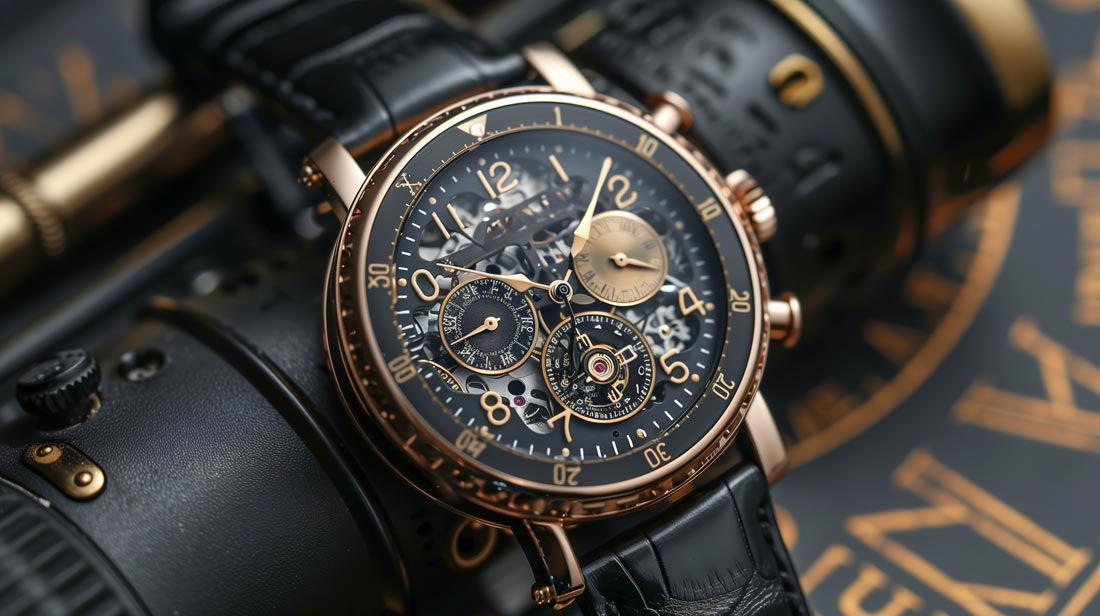
At the heart of every mechanical watch sits a remarkable piece of engineering. Springs, gears, and levers work together in precise synchronization to keep time. The movement operates entirely through mechanical energy stored in a coiled mainspring.
Once wound, that energy slowly releases through the gear train and escapement, regulating the motion of the balance wheel. The process converts stored energy into consistent movement, allowing the hands on the dial to mark the passage of time.
For collectors, this miniature machinery is fascinating. Hundreds of carefully designed parts interact in a space no larger than a few stacked coins.
Many collectors enjoy seeing the movement through a display caseback or studying vintage calibers that represent earlier stages of watchmaking technology. The inner workings often look more like a piece of fine jewelry than a piece of industrial equipment.
History Lives Inside the Case
Vintage watches also carry stories from the time in which they were made. Watches built in the 1940s, 1950s, or 1960s were produced during a period when mechanical watchmaking had reached an extraordinary level of refinement.
Each decade introduced new designs, technical improvements, and manufacturing techniques. Cases evolved in shape and size. Dials featured different materials and finishes. Movements were updated with improved accuracy and durability.
For collectors, a watch becomes more than an object that tells time. It becomes a small historical artifact.
A watch produced in the mid-20th century may have traveled across continents, passed through generations of ownership, and quietly measured thousands of ordinary days. That sense of history adds character that modern mass-produced electronics rarely provide.
Craftsmanship That Still Impresses
Vintage mechanical watches were built during an era when many components were finished by hand. Even parts hidden deep inside the movement often received decorative finishing such as polishing, striping, or engraving.
These details were not strictly necessary for timekeeping, but they reflected pride in craftsmanship. The people building these watches expected the pieces to last for decades, and in many cases they did exactly that.
When a well-maintained vintage watch is opened for service, the quality of construction is immediately apparent. Bridges fit precisely, gears mesh smoothly, and the movement architecture often shows thoughtful design.
Collectors appreciate that level of workmanship because it represents a different approach to manufacturing. The goal was not simply efficiency. The goal was longevity.
Mechanical Watches Require Participation
Another reason collectors enjoy mechanical watches is the small ritual involved in owning one.
Manual-wind watches require regular winding. Automatic watches respond to movement on the wrist, storing energy through a rotating rotor. Both systems create a connection between the owner and the watch itself.
Unlike a digital device that quietly runs until the battery dies, a mechanical watch asks for occasional attention.
Some collectors enjoy the quiet moment of winding a watch in the morning. Others appreciate the rhythmic ticking that reminds them a mechanical process is unfolding inside the case.
The relationship becomes slightly interactive, which gives the watch a personality that electronics tend to lack.
Design That Ages Gracefully
Vintage watch design has also proven remarkably durable from a style perspective. Many watches from the mid-century era feature balanced proportions, simple dials, and elegant cases.
These designs tend to age well. A classic stainless steel watch with a clean dial can look just as appropriate today as it did sixty years ago.
Modern watches sometimes become larger, brighter, and more complex in appearance. Vintage watches often reflect a quieter approach to design.
Collectors appreciate that restraint. The result is a watch that feels timeless rather than trendy.
Rarity and Discovery
Part of the enjoyment of collecting vintage watches lies in the search itself. Unlike modern production watches, vintage pieces are no longer manufactured. The number of surviving examples is limited.
Condition varies widely depending on how the watch was used and maintained over the years. Original dials, untouched cases, and correct components become important factors for collectors.
Finding a well-preserved example can feel like uncovering a small treasure.
That sense of discovery adds excitement to the collecting process. Each watch has its own story, and sometimes that story reveals itself slowly through research, restoration, or simply careful observation.
Mechanical Watches in a Digital World
Digital devices now provide extremely precise timekeeping. Atomic clocks and GPS signals keep modern electronics synchronized down to fractions of a second.
Mechanical watches cannot compete with that level of precision, and that is perfectly fine.
The appeal of a vintage mechanical watch does not come from beating technology at its own game. The appeal comes from craftsmanship, design, history, and the quiet satisfaction of a well-built machine continuing to function decades after it was created.
A mechanical watch reminds collectors that precision engineering existed long before smartphones arrived in pockets.
A Small Machine That Keeps Going
Vintage mechanical watches continue to attract collectors because they represent something enduring. They combine artistry and engineering in a form that remains practical, beautiful, and fascinating.
A well-maintained mechanical watch can continue ticking for generations. Springs can be replaced, movements can be serviced, and the tiny gears inside can keep moving long after their original owners have passed them along.
In a world where many devices become outdated within a few years, that kind of longevity feels refreshing.
And perhaps that is part of the charm. A vintage watch does not rely on software updates, wireless signals, or charging cables.
It simply keeps time… one small tick at a time.